


Hoki
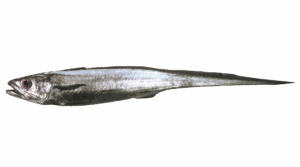
also known as Macruronus novaezelandiae
NZ: Whiptail, Blue Grenadier, Blue Hake
CIS: Novozelandskiy Macruronus
DE: Langschwanz-Seehecht
ES: Merluza Azul
FR: Hoki de Nouvelle-Zélande Merluse, Merlu a Longue Queue
IT: Merluzzo Neozelandese, Nasello Neozelandese, Nasello Azzurro
JP: Hoki
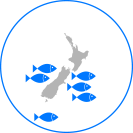
Hoki are found in deepwater all around New Zealand, with major concentrations in Cook Strait, the west coast of the South Island and the Chatham Rise.
Hoki are thin and tapered and have silvery-blue scales that are easily dislodged. They are highly abundant schooling fish. They are also an extremely important commercial trawling catch, with the fishery certified as sustainable by MSC (Marine Stewardship Council).
Hoki have a delicate texture with white flesh that flakes easily when cooked. Best suited for baking, smoking, frying, or in soups.
| Nutritional Information | |
|---|---|
| Quantity per 100 grams | |
| Energy (kJ) | 347 |
| Protein (g) | 18.9 |
| Fat | |
| Total (g) | 0.7 |
| Saturated (g) | 0.2 |
| Carbohydrates (g) | <0.1 |
| Sugars (g) | 0.1 |
| Sodium (mg/100g) | 65 |
| Months Caught | |
| Jan, Feb, Mar, Apr, May, Jun, Jul, Aug, Sep, Oct, Nov, Dec | |
| Peak Months | |
| Jun, Jul, Aug, Sep | |
| Catch Areas | |
 |
|